
 Français
  English USA
  Deutsch
  Pусский
  中国
中国  Polski
Should we talk about tubes or pipes ?
Actu Protem DICO_MOMENT_ILYA 9 DICO_MOMENT_HEURESTube or Pipe? Understanding the Difference Before Machining !
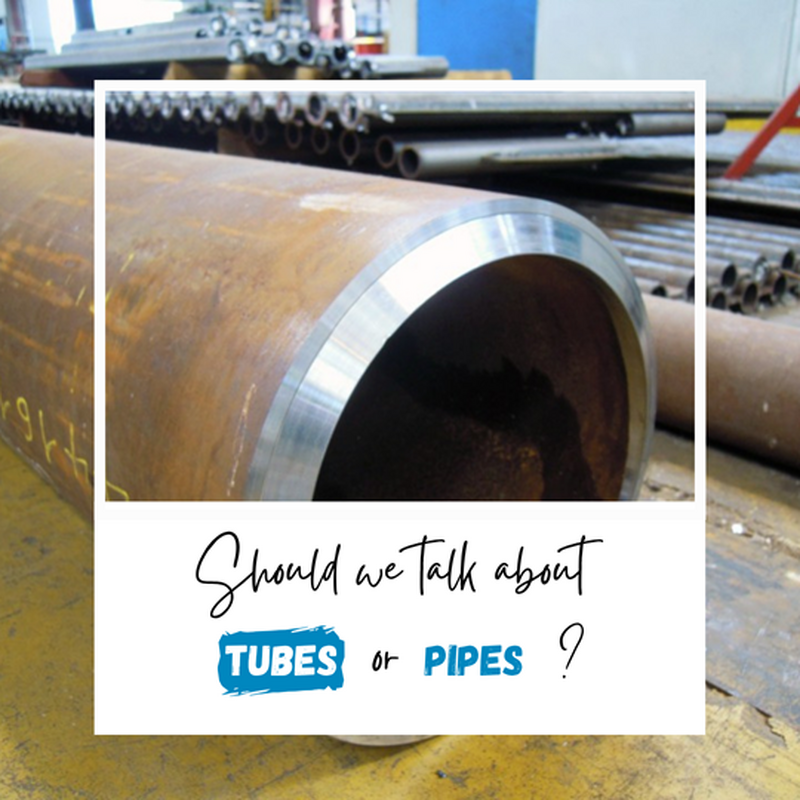
Tube or Pipe? Understanding the Difference Before Machining !
In the industrial world, “tube” and “pipe” are sometimes confused. While both are hollow products, they differ in their dimensions, specifications and typical applications.
Understanding these differences is important, especially when it comes to machining and preparing components for welding.
One of the main differences is the way their dimensions are defined.
Pipes are commonly identified by their Nominal Pipe Size (NPS) and schedule.
Tubes, on the other hand, are generally specified by their outside diameter (OD) and wall thickness. Depending on the application, the inside diameter (ID) may also be used.
A pipe is generally round, as it is primarily designed to transport liquids, gases or other fluids through a system.
Tubes can be round, square or rectangular, making them suitable for a wider range of applications.
These are general distinctions, however. The applicable standards and specifications depend on the industry and application.
Wall thickness is important for both tubes and pipes, but it is not expressed in the same way.
For pipes, thickness is generally associated with the schedule system. For tubes, the wall thickness is usually specified directly alongside the outside diameter.
Size alone does not determine whether a product is a tube or a pipe. The way it is specified and its intended application are equally important.
Both tubes and pipes can be manufactured from materials such as carbon steel, stainless steel, nickel alloys, titanium or copper alloys.
Depending on the material and required properties, different manufacturing processes may be used, including cold working and hot working.
The manufacturing process can influence dimensional accuracy, surface finish and mechanical properties.
Whether you are working with a tube or a pipe, the end preparation can be critical before welding.
Depending on the application, the component may need to be:
The machining process must take into account the diameter, wall thickness, material and required bevel geometry, as well as the applicable welding requirements.
At PROTEM, we develop portable machining solutions for tube and pipe preparation, helping industries achieve accurate and repeatable results both in workshops and on site.
Tube or pipe? The difference matters - and so does the preparation !